From Humble Beginnings Brown Creates Coaching Legend
BATON ROUGE, La. — Just across the street from where Billy Cannon ran his way to the 1959 Heisman Trophy and the Chinese Bandits became a household name for fans in football-crazed Louisiana, stands a rather unsightly structure that is home to basketball at Louisiana State University.
Take a walk through the corridors and some of the most famous names in college basketball history virtually jump out and grab your attention. Pete Maravich, whose name adorns the Pete Maravich Assembly Center. Shaquille O’Neal. Chris Jackson. Stanley Roberts. The list goes on and on.
LSU is one of just two schools to have three players selected among the top 50 college basketball players of all-time.
From high above the rafters of the spacious and memorabilia-laden PMAC, just a short distance from the banks of the Mississippi River, a banner speaks volumes of the contributions to the LSU program made by one of North Dakota’s most famous sons and statesmen.
Dale Brown left a legacy at the school that will be hard-pressed to duplicate.
It was an accomplishment that few figured Brown could achieve when he took over the program in time for the 1972-73 season after spending five seasons as an assistant coach at Utah State University and one season as an assistant at Washington State University.
“LSU had losing records in 14 of the 16 seasons before I got the job,” said Brown, a 1953 graduate of St. Leo’s, now Bishop Ryan High School, in Minot.
Brown wasted little time in turning around the fortunes of LSU basketball. He led the Tigers to a 14-10 record in his first year after being picked to finish in the cellar of the always-tough Southeastern Conference that season. It was the first of 17 winning seasons in his 25 years at the school.
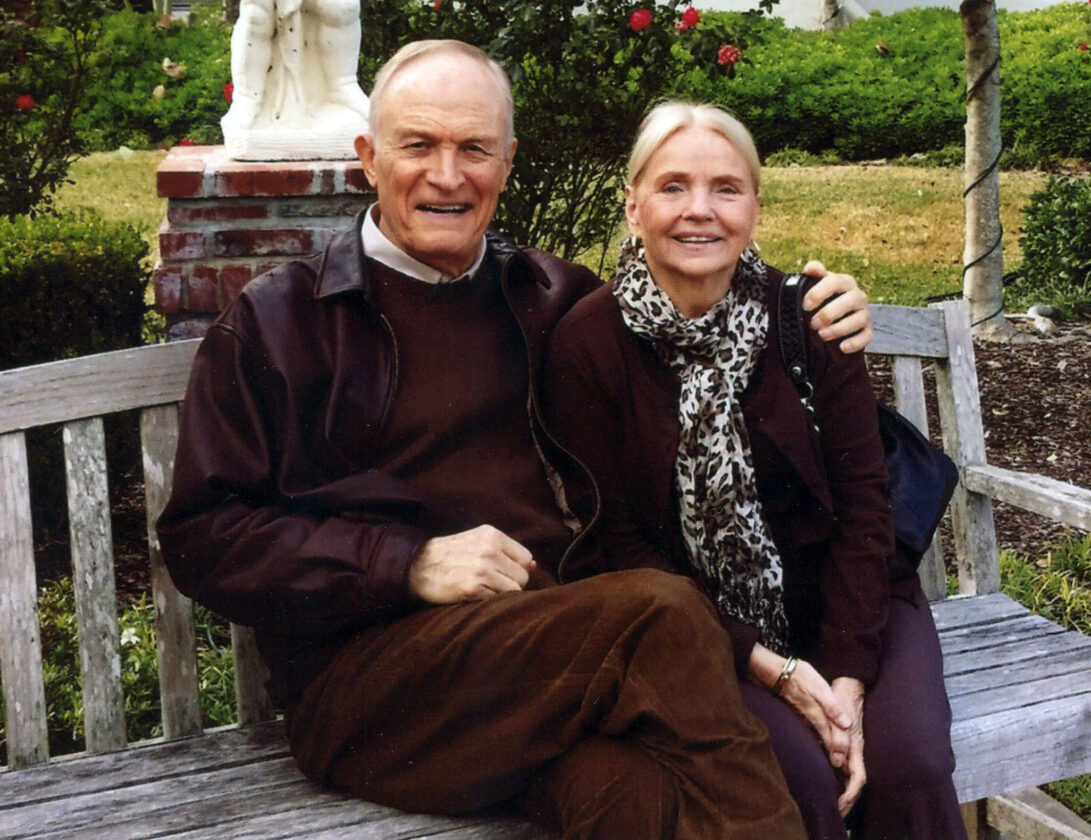
Born on Halloween in 1935, during the Great Depression, Brown grew up, along with two sisters, being raised by their mother, who rode a taxi home after giving birth to the boy who would later become a coaching legend.
His father had abandoned the family just two days before Brown was born and the two did not meet until his father made an unannounced visit to Brown while in class one day at St. Leo’s. It was a meeting the younger Brown ended in a hurry and returned to class. The two would meet some nine years later when Brown, while stationed in the service in Fort Riley, Kansas, made a trip to Enid, Oklahoma to have a brief discussion with his father.
“Sports were my father-figure,” Brown said. “They gave me a direction and a purpose.”
Brown led the state in scoring as a senior with a 22 points per game after helping the Lions to the state tournament as a key reserve the previous year.
It was in that tournament, at Hyslop Arena, on the campus of the University of North Dakota, that Brown first made contact with another former North Dakota great that went on to a successful coaching career at the collegiate level and with whom Brown, along with Harvey, N.D. native Jud Heathcote, would be forever entwined.
Lute Olson led Grand Forks Central to the state title in 1952 after knocking off Brown and the Lions 54-44 in the opener and left an impression on the younger Brown, as did the experience of playing in the state tournament.
“I remember the absolute thrill of going to the state tournament,” said Brown, who still resides in Baton Rouge, where he was a neighbor of Cannon before the former Heisman Trophy winner died in 2018. “It was like Madison Square Garden. I thought Hyslop was just gigantic.
“Lute Olson and the rest of the players on the Grand Forks team were all outstanding basketball players,” Brown added. “They were so much more mature and so much more poised than everyone else. But, it was also easy to see that (Olson) was the undoubted leader of that team.”
Twenty-seven years later the three North Dakotans would have their respective teams in the final AP poll at the end of the 1978-79 season. Heathcote’s Michigan State Spartans, led by Magic Johnson, were ranked No. 3 in that poll, while Brown’s LSU squad was ranked No. 9 and Iowa, coached by Olson, was No. 20.
After graduating from St. Leo’s, Brown enrolled at Minot State College, opting against playing at the University of North Dakota after a visit to the school.
“I was so intimidated by the lifestyles of the players (at UND),” Brown said. “Many of them had fancy clothes and cars … and I had an inferiority complex.”
Whatever shortcomings Brown believed he might have had began to erode once he got on the floor at Minot State, which was guided by another North Dakota coaching legend, Herb Parker.
“What I learned from (Parker), first of all is that he was a magnificent man,” Brown said of his college mentor. “He knew the game of basketball and he was a genuinely nice man.”
Led by Parker and Brown, Minot State advanced to the NAIA national tournament in 1954. Played in Kansas City’s famed Municipal Auditorium, the same site that played host to the first-ever NCAA Final Four some 15 years earlier.
While a student at Minot State, Brown coached the junior varsity team at his former school. When his Beaver career ended in 1957, Brown took his first job as a teacher and coach at tiny Columbus High School in the far northwest corner of his native North Dakota.
“I coached basketball and track, taught classes and was the principal,” Brown said. “They paid me $4,700 per year and I couldn’t believe I was making that kind of money.”
While at Columbus, Brown also initiated the wrestling program at the school and led the team to a fifth-place finish in the inaugural state tournament in 1959.
“We bought some films and books,” Brown said. “No one knew much about the sport, but we studied our tails off.”
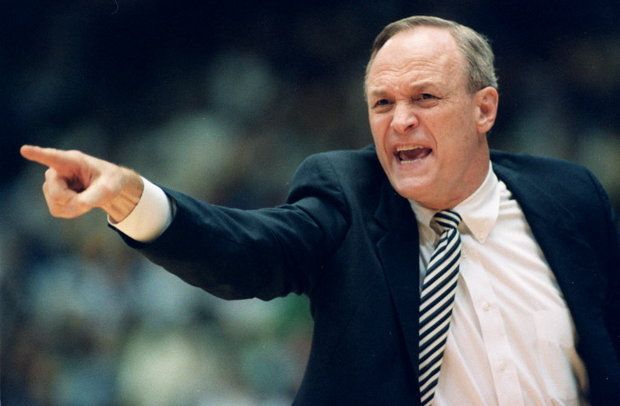
But after that 1958-59 season a call from Fr. Blaine Cook brought Brown back to Minot and to St. Leo’s. He spent five years as an assistant football coach under Mandan native, Ron Erhardt, who later went on to coach North Dakota State University and also coached the New England Patriots of the National Football League. Brown also guided the Lions for five years on the basketball court.
Soon though, Brown and his wife, Vonnie, realized they were not making enough money and decided to move to California. The young couple, along with their young child, traveled the coast of the Golden State, looking for cities in which each of them could teach.
The couple wound up in Berkeley, Calif. for one year at the height of the Free Speech movement that was quite different from the traditional values taught to Brown in conservative North Dakota as a youngster. While teaching and coaching at Palm Springs High School, Brown began a letter-writing campaign in the hopes of landing a college coaching position. Two schools, Utah State and Michigan State, responded and it was during a recruiting visit to California by then-Utah State coach Ladell Anderson that Brown was offered a chance to coach at the college level at the tiny school in the mountains of northern Utah.
He remained with the Aggies for five years and spent one year as an assistant at Washington State. It was after that one season in Pullman, that Brown got his chance to run a collegiate program of his own. He was offered the job with the Cougars, while LSU also came calling for his services.
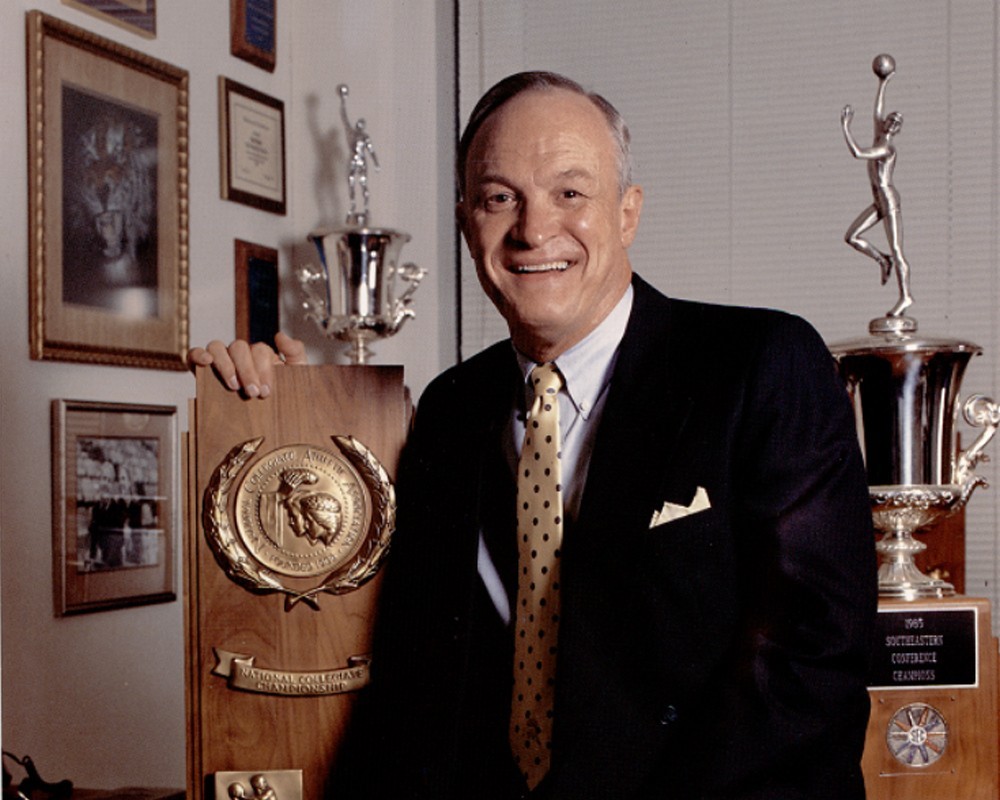
The Tigers won out.
Brown replaced the legendary Press Maravich, who had spent six years at LSU and guided the Tigers to a 76-86 record during that time. In the 25 years prior to Brown’s arrival, LSU had won 288 games and appeared in a pair of NCAA tournaments, while posting winning records in just four of the previous 18 seasons.
And it took little time for Brown to make his mark at LSU and begin winning converts from football to basketball.
In his first home game as head coach, Brown’s Tigers defeated Memphis State 94-81. Memphis State would later go on to fall to powerful UCLA in the NCAA title game some four months later.
It was one of a handful of games the North Dakota native fondly recalls. That list also includes a 1978 game at the PMAC where all five LSU starters fouled out, but the Tigers went on to hand Kentucky, the eventual national champion a 95-94 overtime loss.
He also remembers some bitter setbacks, such as the 1987 regional final against Indiana where the Hoosiers took the lead with six seconds to go and ended LSU’s hopes of returning to the Final Four for a second straight season. Another loss that still haunts the coaching icon is a loss to Kentucky in which the Tigers led by 31 at one point.
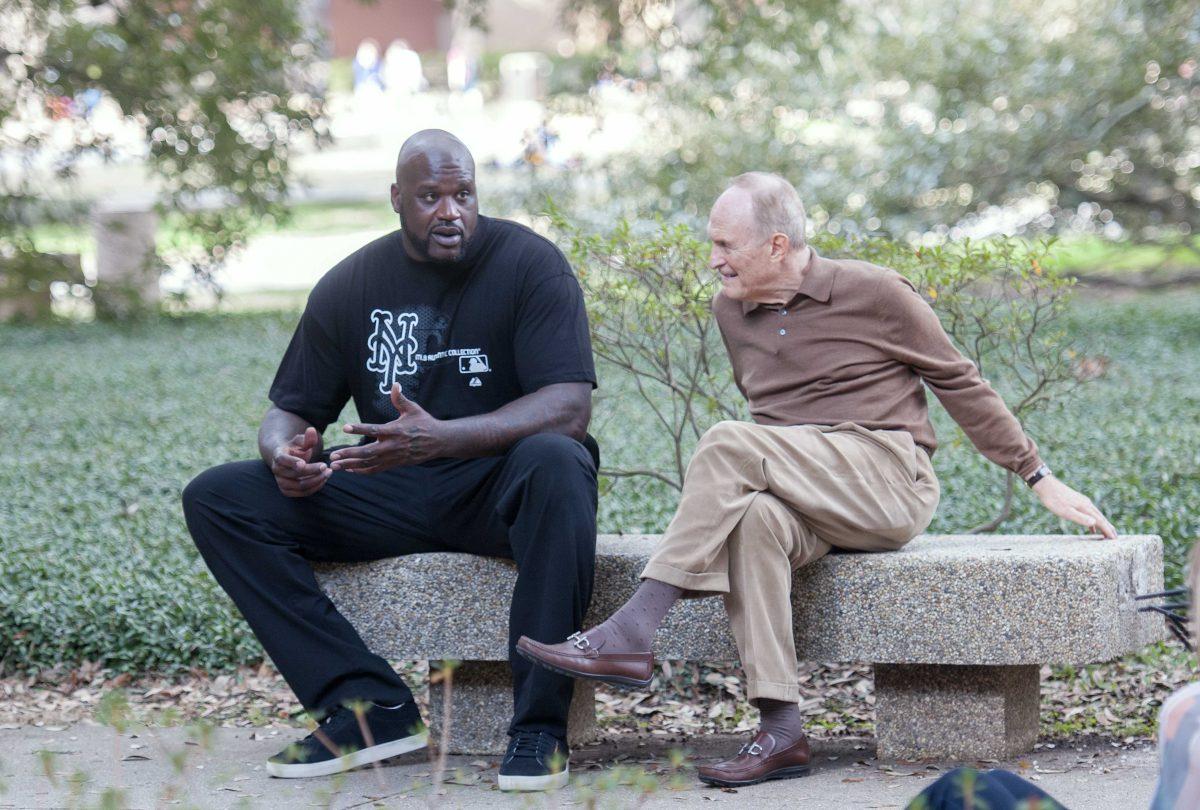
During Brown’s tenure in the Bayou Country, he happened upon a young basketball player that would later play for the legendary coach and eventually dominate at the professional level like few players ever have. It was also the beginning of a bond between player and coach that carries on more than two decades after Brown hung up his whistle for the final time.
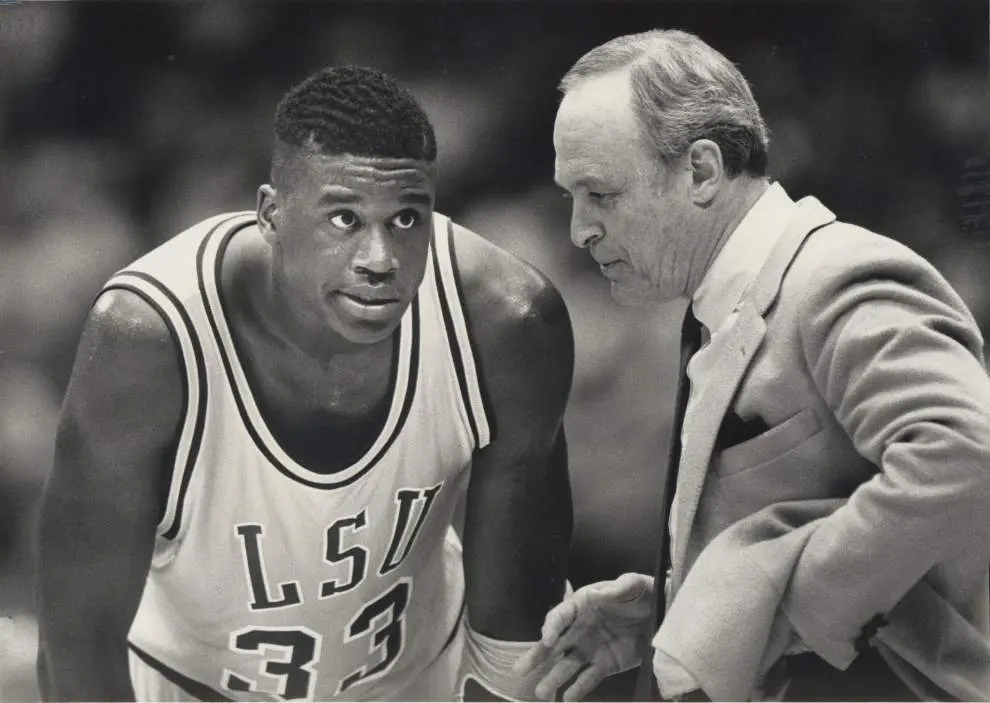
“Coach Brown taught me a lot,” said Shaquille O”Neal, who Brown met as a six-foot, nine-inch, 250-pound 13-year-old boy in Germany, where O’Neal’s father was stationed in the Army. “When it was time for me to go to college, I was recruited by many coaches. Some of them tried to buy me, but coach Brown never did and we respected him for it. He kept focused on the things that were important to me, education and family. (Brown’s) understanding of the game is legendary and he gave me the knowledge I still use today.”
The two remain close and the Hall-of-Famer added: “Coach Brown is one of my heroes and because he taught me to listen, they say I am the best big man ever.”
A nine-time SEC Coach of the Year, Brown, the winningest coach in LSU history, retired with a 448-301 record at LSU. He was twice chosen the national coach of the year and is a member of the Louisiana Sports Hall of Fame, the Louisiana Basketball Coaches Hall of Fame and was voted an SEC Living Legend.
A renowned humanitarian, Brown has traveled the world doing his part to ease the plight of people in undeveloped countries. In 1993 he joined Mother Teresa helping out in Calcutta, India.
“(Brown) did an outstanding job in raising the level of LSU basketball to the status of equality to anyone in the country,” Wooden once said of the LSU coach. “If heads of states throughout this troubled world of ours had real concern and consideration for others as Dale Brown has, I doubt if our racial, religious, and political problems would be a major issue.”
“She was an absolute saint,” Brown said of the iconic Mother Teresa.
Brown entertained the thought of entering the political ring several years ago, but said he decided against it after a pair of visits to Washington, DC.
“I was turned off on both occasions,” Brown said. “It was all pretty distasteful to me.”
Brown, who now 90 years old, went on to operate Dale Brown Enterprises, where he was in great demand as a motivational speaker.
Brown has never forgotten his humble roots from the plains of North Dakota.
“The things I learned growing up in North Dakota have been invaluable,” Brown said. “I was taught a work ethic and a perseverance. It is a humbling experience growing up with nothing and getting something.
“There is just something in the air in North Dakota that really helps us prepare for all that life has to offer,” added Brown.
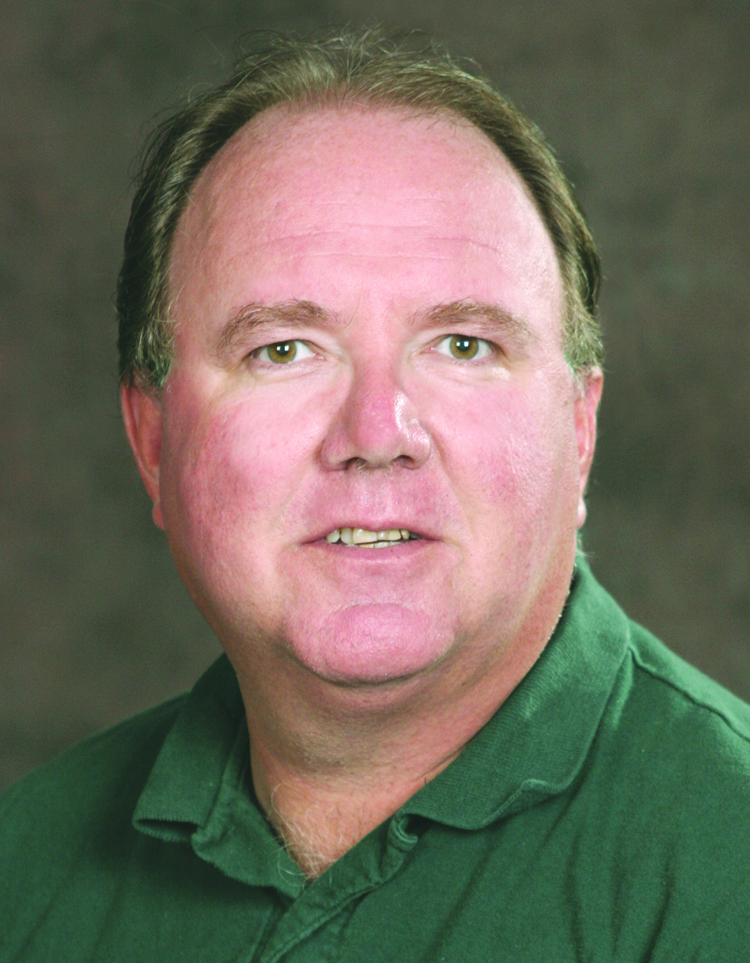
A native of Bismarck, N.D., Ray is a graduate of North Dakota State University where he began studying athletic training and served as a student trainer for several Bison teams including swimming, wrestling and baseball and was a trainer at the 1979 NCAA national track and field championship meet at the University of Illinois. Ray later worked in the sports information office at NDSU. Following his graduation from NDSU he spent five years in the sports information office at Missouri Western State University and one year in the sports information at Georgia Tech. He has nearly 40 years of writing experience as a sports editor at several newspapers and has received numerous awards for his writing over the years. A noted sports historian, Ray is currently an assistant editor at Amateur Wrestling News.
